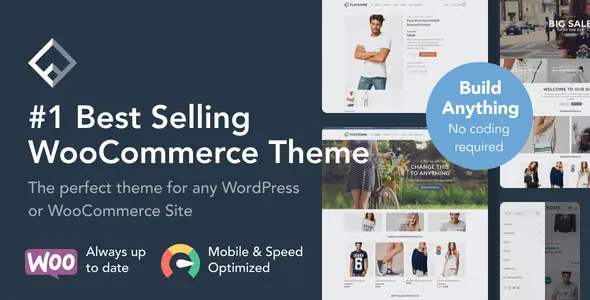
BoxShop WooCommerce WordPress Theme

$49.00 Original price was: $49.00.$4.99Current price is: $4.99.
BoxShop WooCommerce WordPress Theme is a design and structure solution for WooCommerce stores that need to combine visual speed, a clear product hierarchy, and frictionless checkout flows. Ideal for operators managing medium to large catalogs, its main technical benefit lies in offering a conversion-optimized theme architecture with direct integration with the WooCommerce ecosystem.
Introduction to BoxShop WooCommerce WordPress Theme
BoxShop WooCommerce WordPress Theme is a specialized theme that eliminates the usual friction between visual design and functional performance in WordPress stores, offering a structural foundation that connects directly to the catalog, cart, and checkout processes without the need for complex intermediate layers.
The technical nature of this plugin positions it as a presentation layer that not only defines how the store looks, but also how it behaves at every user touchpoint. It reduces the operational burden associated with manual customization and minimizes layout errors that often occur when combining generic themes with specific WooCommerce extensions.
Imagine an administrator who receives weekly reports of product page abandonment: images that don't load properly on mobile, purchase buttons that visually compete with recommendation blocks. Upon evaluating this issue, they discover that the product template structure is optimized for this exact flow, and in the back office, they can adjust sections without touching any code.
Product overview
When managing a WooCommerce store with a growing catalog, visual stability and UX consistency between category, product, and checkout pages become factors that directly impact the conversion rate and the time the team spends on recurring fixes.
Before implementing this tool, many retailers face a scenario where the active theme wasn't designed for WooCommerce: product elements are misaligned, category pages lose visual hierarchy, and the checkout process suffers from style inconsistencies that generate distrust among the end customer. By integrating this module, each template responds to the purchase flow consistently. The result is an operation where the team spends less time on visual fixes and more on strategic decisions.
- Without the add-on: The active theme causes style conflicts on WooCommerce pages, the cart shows layout mismatches on mobile, and the team intervenes manually after each update.
- With the active add-on: Native product, category, and checkout templates are rendered with visual consistency across all devices, without recurring manual intervention.
- Observable result: Less time spent on internal visual support, a smoother shopping experience for the end customer, and a back office with greater control over the catalog presentation.
Requirements and compatibility
For this module to function stably, you need an active WordPress installation with the WooCommerce plugin enabled; before deploying it to production, it's advisable to check that any installed third-party plugins—especially those related to page builders or sliders—don't conflict with the theme templates.
- Main dependency: WooCommerce must be active and configured with at least one working payment gateway for the checkout and cart templates to display their full functionality.
- Areas of compatibility typically verified: individual product pages, category archives, cart, checkout, zone tax management, shipping modules, and discount coupons.
- Scenario where it is advisable to do preliminary testing: if the store uses a visual page builder to overwrite WooCommerce templates, it is recommended to validate in a staging environment that the theme does not conflict with those overwrites before publishing to production.
Key benefits for your operation
- Product abandonment reduction: Many retailers lose sales because the product page doesn't visually prioritize the purchase button. This tool structures the hierarchy of elements so that the main action is always the focus, reducing visual clutter that hinders the purchase decision.
- Consistency between devices without extra work: Managing a theme that doesn't respond well on mobile consumes hours of manual adjustment every time content is updated. This plugin includes responsive structures designed for WooCommerce flows, meaning the team doesn't need to intervene after each product launch.
- More predictable back office: When the theme isn't aligned with WooCommerce, changes in the admin panel can produce unpredictable results on the front end. This module's native integration ensures that back-office settings are accurately reflected in the store, reducing display errors.
- Catalog scalability without visual degradation: As a store grows in the number of SKUs and categories, maintaining visual consistency becomes more difficult. This extension offers archiving and filtering structures that scale without losing consistency, preventing catalog growth from becoming a design problem.
- Less reliance on developers for routine adjustments: Operators without their own technical teams often pay for every small visual change. This plugin exposes customization options accessible from the dashboard, allowing you to adjust colors, fonts, and element layout without writing code.
- UX optimized for conversion at checkout: The checkout process is where most abandonment occurs. This tool presents this flow with a clean structure, free of distracting elements, helping the customer complete the purchase with fewer cognitive interruptions.
Key features of the BoxShop WooCommerce WordPress Theme
- Product templates specifically for WooCommerce: Unlike generic themes that superficially adapt their templates, this module includes structures specifically designed for WooCommerce content types—simple, variable, and grouped products—ensuring that each product type is presented consistently without additional configuration.
- Filtering and category navigation system: In stores with extensive catalogs, unfiltered navigation leads to frustration and abandonment. This extension incorporates filtering structures that allow customers to narrow down results by attribute, price, or category without reloading the page, improving the browsing experience.
- Visual integration with WooCommerce blocks: The WooCommerce block ecosystem has become increasingly important for content management. The tool is designed so that native blocks—featured products, cart, checkout—render using the theme's style without requiring additional custom CSS.
- Customization options from the Customizer: WordPress's native customization panel exposes theme-specific controls that allow you to adjust the store's appearance in real time. This means an operator can see the impact of each change before publishing it, reducing the risk of errors visible to the customer.
- Structure optimized for loading speed: Themes with excessive scripts and global styles slow down response times, negatively impacting both user experience and search engine ranking. This plugin maintains a clean codebase, loading resources only where needed within the WooCommerce workflow.
- Compatibility with common marketing and UX plugins: Tools like wishlists, product comparison tools, and conversion popups often create visual conflicts with unprepared themes. This module's architecture is designed to coexist with these extensions without breaking the layout of product or shopping cart pages.
Who is this product for?
This plugin is especially valuable for those running growing WooCommerce stores who have reached the point where their current theme creates more maintenance problems than value: recurring visual conflicts, time wasted on manual adjustments, and an inconsistent shopping experience across devices. It's not a specific job title, but rather a relatable situation.
- Administrators or technicians who need predictable control over the catalog presentation and checkout flow, without relying on code interventions with each update.
- Teams that manage multiple projects or stores and need a consistent visual starting point that doesn't require complete reconfiguration on each deployment.
- Marketing or UX managers who depend on the store's visual structure to properly support their campaigns, product landing pages, and conversion flows without interference from the base theme.
Real-world use cases
- Electronics store with a changing catalog: An operator manages hundreds of products with multiple color and capacity variations. The problem is that the variable product pages display mismatches when the customer selects attributes. By using this module, the variable product templates respond consistently, displaying updated images and prices without layout breaks. As a result, the customer can explore variations without visual uncertainty, and the operator no longer receives support inquiries about product availability.
- Fashion brand focused on mobile experience: The team detected that over 60% of traffic came from mobile devices, but the conversion rate on those devices was significantly lower. Upon migrating to the new theme, the product and checkout structure adapted natively to the mobile viewport without any additional adjustments. Mobile abandonment metrics improved noticeably in the weeks following the change.
- Multi-brand store that uses category filters intensively: Customers need to filter by brand, price, and technical specifications simultaneously. With the theme active, the filtering system integrates seamlessly into the category architecture without style conflicts, and results update smoothly. The content team no longer receives complaints about filters that don't work or that disrupt the layout.
- Operator that manages campaigns with coupons and featured products: During promotional periods, offer banners and discounted product blocks need to be integrated into the homepage without disrupting its structure. This plugin allows the marketing team to place these blocks directly from the Customizer, without involving the technical team. The campaign launches on schedule and with the look and feel designed by the marketing team.
Frequently Asked Questions about the BoxShop WooCommerce WordPress Theme
Does this theme work with any WordPress installation or does it require specific pre-configuration?
For the tool to operate stably, WordPress and WooCommerce must be active and correctly configured. Complex pre-configuration is not required, but it's advisable to check that any installed page builder or slider plugins don't overwrite the WooCommerce templates before activating the theme. A quick review of the active plugin list is usually enough to anticipate conflicts. If the store uses a custom child theme, consider whether migrating would require recreating those customizations within the new framework.
How does this issue affect the customer experience during the purchasing process?
The most direct impact is seen in the visual consistency of the purchase flow: from the category page to checkout, the customer experiences a seamless experience without any jarring style shifts that might create distrust. The cart and checkout templates are structured to minimize distractions and keep the focus on the purchase. In stores where the previous design led to inconsistencies on mobile, the change is often reflected in a noticeable reduction in abandonment at those stages.
Does the theme include any system for automating visual rules based on store conditions?
The tool isn't a conditional rules engine on its own, but it does respond dynamically to the conditions that WooCommerce manages: out-of-stock products are automatically marked visually, discounted prices are displayed with a distinct hierarchy, and unavailable variants are disabled in the interface without any additional configuration. For more complex automations—such as displaying conditional content based on user role or purchase history—it's best to combine it with specific WooCommerce extensions.
What happens if a customer has a failed payment or needs to retry a purchase?
The theme leverages WooCommerce's logic to handle these scenarios: payment error and retry pages are rendered within the theme's templates, maintaining the visual consistency the client expects. It doesn't add its own failed payment management logic, but it ensures that the pages WooCommerce generates for these cases don't break the layout. If the store requires advanced cart recovery flows or failed payment notifications, that functionality is handled by dedicated extensions.
How does the system handle taxes, shipping zones, and coupons applied to the shopping cart?
The theme's cart and checkout blocks display tax calculations, shipping options, and coupon fields exactly as WooCommerce presents them, without interfering with the underlying calculation logic. The difference lies in the presentation: these elements are shown with a clear visual hierarchy, so the customer understands what they are paying for and why without needing to read additional explanatory text. This reduces support inquiries related to confusion in the order summary.
Does the theme's performance degrade when the store has a high volume of products or concurrent traffic?
This plugin is built with a contained codebase that avoids loading unnecessary resources on pages where they aren't used. With a high volume of products, performance depends more on server configuration, active caching, and image size than on the theme itself. That said, it's unreasonable to expect any theme alone to resolve infrastructure limitations: combining this module with a suitable caching solution is standard practice for stores with significant traffic.
Is it possible to use this theme in a multisite installation or managing multiple stores from the same panel?
The theme can be activated in WordPress multisite environments, allowing different sites within the network to use it independently with their own visual configurations. Each WooCommerce instance within the network will operate with its own templates and Customizer settings, making it easy to maintain distinct visual identities without duplicating development work. For teams managing multiple stores, this represents a significant operational advantage over themes that don't natively support this architecture.
How can I verify that the theme is working correctly after activating it?
A practical checklist includes: verifying that product, category, cart, and checkout pages render without visual errors on desktop and mobile; checking that WooCommerce blocks within custom pages maintain the theme's style; verifying that category filters respond correctly; and confirming that the Customizer displays theme-specific controls without JavaScript errors. If any of these points fail, it usually indicates a conflict with another active plugin, which can be diagnosed by disabling extensions one by one in a test environment.
Short description
WooCommerce theme with native templates optimized for conversion, consistent shopping experience across all devices, and customization accessible from the dashboard, without the need for code intervention for routine operational adjustments.

Written and reviewed by the PrimeGPL Team
At PrimeGPL, we ensure that every piece of published content is verified and reviewed by our team. We analyze features, compatibility, and performance to provide you with clear, up-to-date, and truly useful information for each product listed in our store.
Get your questions answered here
We answer your questions so you can buy in an informed and confident manner.
Does my purchase include updates?
Yes. Every product purchase includes lifetime updates, so you won't have to pay extra under any circumstances.
Is there a daily download limit?
No, not at all. After your purchase, you can download it as many times as you need, without any problem.
On how many websites can I use the products?
You can use your purchases on as many domains (websites) as you want, without any problems.
Does it include technical support?
Yes. We offer technical support Monday through Friday, during business hours UTC -3. This support includes assistance with issues related to download problems, installation problems, or errors with the purchased product.
Furthermore, support does not include configurations, customizations, tutorials, or services associated with the author.
Does my purchase have a warranty?
Yes, of course. If you have any problem that we can't solve, or if there's an external issue that doesn't have a general solution related to our service, you'll receive support and, if necessary, a full refund.
How do I access support?
After your purchase, from your user account, you can access the support section, where you can open a ticket and our team will assist you with whatever you need.
Download Previous Versions
If you have purchased this product, or have an active membership, you can download previous versions without any limits or restrictions.
| Product Name | Version | Size | Date | Download |
|---|---|---|---|---|
| No hay versiones anteriores registradas. | ||||
Related Products
Below we show you different products that share the same category.