Flatsome WooCommerce WordPress Theme
$59.00 Original price was: $59.00.$4.99Current price is: $4.99.
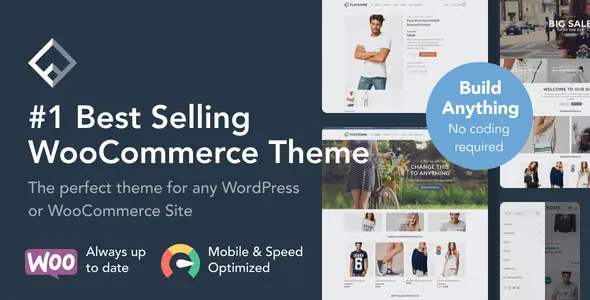
Flatsome WooCommerce WordPress Theme is a visual design and building solution for stores that need real speed, brand consistency, and a smooth checkout process without relying on custom code. Ideal for operators managing demanding catalogs on WooCommerce, it combines a built-in page builder with reusable blocks that reduce production time and layout errors with each update.
Introduction to Flatsome WooCommerce WordPress Theme
Flatsome WooCommerce WordPress Theme solves one of the most persistent problems in e-commerce operations on WordPress: the disconnect between the design the team envisions and what actually appears on the client's frontend, eliminating the friction of having to coordinate developers, designers, and content editors on every minor store change.
The tool integrates its own visual builder—UX Builder—directly into the WooCommerce environment, meaning that editing workflows for product pages, collections, and campaign landing pages occur within the same workspace, without leaving the backend. This seamless integration reduces saving errors, style inconsistencies, and the need for external previews that disrupt the team's workflow.
An administrator who needs to update the category page before a launch opens the editor, adjusts the hero block, reorders the trusted items, and publishes directly from the same screen where they review the inventory. There are no exports, no template cache conflicts, and no waiting.
Product overview
This plugin acts as the complete visual layer of a WooCommerce store, unifying the design of product pages, collections, checkout, and homepage under a coherent block system that scales without losing consistency when the catalog grows or the team changes.
Before this extension, many stores operated with a mix of manually modified child-theme templates, scattered shortcodes, and Gutenberg blocks that didn't communicate with the global styles. Each new campaign required technical intervention. With the module active, the marketing team can edit entire sections from the front end, and the changes automatically adhere to the typography and color scheme defined in the global settings.
- Without the add-on: Each visual update requires editing template files or hiring on-demand development, creating bottlenecks before key dates like Black Friday or collection launches.
- With the active add-on: The team builds new page sections by dragging pre-built blocks of product, testimonial or CTA, linked to the theme's global styles.
- Observable result: Campaign pages are produced in hours, not days, with guaranteed visual consistency and without touching code, reducing revisions and publishing errors.
Requirements and compatibility
For this tool to work correctly, WooCommerce must be active as an e-commerce plugin on a WordPress installation; it is also advisable to verify that caching plugins, image optimization plugins, and any additional page builders do not conflict with the theme's own block system before deploying the changes to production.
- Main dependency: WooCommerce must be operational for the theme's product, cart, and checkout templates to work with their native styles.
- Documented compatibility areas: product pages, one-page checkout, subscription renewals if using WooCommerce Subscriptions, zone taxes, shipping rules by weight or destination, and popular payment gateways that do not overwrite the payment template.
- Recommended testing scenario: If the store already has an active page builder such as Elementor or Divi, it is advisable to test coexistence in a staging environment before migrating the highest traffic pages, as there may be conflicts of global styles or duplicate scripts.
Key benefits for your operation
- Production of pages without technical dependence: Store teams that don't have a developer available for each campaign lose time and conversion opportunities. This module allows non-technical users to build complete pages with predefined blocks. The result is true autonomy for the marketing team without the risk of breaking the site's structure.
- Visual consistency in large catalogs: When a store has more than one hundred active product listings, maintaining style consistency across all product pages becomes a problem of scale. This tool automatically applies global styles to all product templates. This eliminates the need for manual visual review of each listing after a brand update.
- Checkout optimized for conversion: A checkout process with too many steps or inconsistent visuals leads to abandonment. This plugin offers simplified checkout templates that reduce the number of clicks and maintain brand consistency all the way to the confirmation screen. Less visual friction means less abandonment at the most critical step in the flow.
- Load speed controlled by design: Heavyweight visual themes that load entire libraries even when they're not in use negatively impact performance and technical SEO. This extension loads only the styles and scripts of the blocks present on each page. The impact is direct on Core Web Vitals metrics, especially on mobile.
- Reusable block system for recurring campaigns: Creating the design for each seasonal campaign from scratch is time-consuming for the team. By saving the blocks as internal templates, a summer campaign can reuse the structure of the previous campaign by simply changing the images and text. This measurably shortens the production cycle.
- Centralized typography and color palette control: When multiple contributors edit the site, the proliferation of ad hoc styles erodes brand identity. This tool centralizes typography and color management in a global panel. Any changes are automatically propagated to all pages using those design tokens.
Key features of the Flatsome WooCommerce WordPress Theme
- Integrated UX Builder: The theme's built-in visual builder operates directly on the frontend, displaying changes in real time without the need for a separate preview. In a store with multiple active category pages, this speeds up editorial editing and reduces layout errors that only appear in production.
- Block library for WooCommerce: It includes dedicated blocks for product listings, zoomable galleries, description tabs, review sections, and cart CTAs. Each block is optimized for the purchase flow, meaning the designer doesn't need to build the conversion architecture for each product page from scratch.
- Flexible headboard and footboard system: It allows you to configure multiple header and footer versions that can be assigned by page type, device, or campaign. A store can display a header with a discount bar only during a sales event and automatically revert it without touching any code or creating duplicate pages.
- Responsive optimization by section: Each block in the constructor has independent visibility and spacing controls per breakpoint. This avoids the common problem in generic themes where hiding an element on mobile inadvertently affects the tablet layout or the order of elements on intermediate screens.
- Integration with WooCommerce logic without legacy shortcodes: The cart, my account, and checkout pages are managed from the builder without relying on shortcodes that can become orphaned after WooCommerce core updates. This native dependency reduces the risk of broken pages during update cycles.
- Global performance settings panel: It offers lazy loading controls for images, script compression, and prioritization of critical resources directly from the theme panel, eliminating the need for additional optimization plugins. For stores with image-intensive catalogs, this simplifies the technical stack and reduces conflicts between performance tools.
Who is this product for?
This plugin has the greatest impact on operations where the team needs to publish visual changes frequently without creating a constant dependency on external development. It also fits well in projects that have grown to the point where manually maintaining brand consistency across dozens of pages is no longer feasible.
- Administrators or technicians who need to have complete traceability of which block each page uses and be able to revert visual changes without affecting the catalog's data structure.
- Agency teams or freelancers who manage multiple WooCommerce stores and need a consistent design system that can be replicated with minor brand adjustments for each client.
- Marketing or UX managers who rely on launching campaign landing pages quickly and without technical reviews in each design iteration.
Real-world use cases
- Seasonal collection launch: A fashion store needs to publish a new collection with a dedicated page, animated hero, and a product grid filtered by tag in less than 48 hours. Without a tool like this, that would require development. With the module active, the content team simply duplicates the previous collection's template, replaces images and text, and publishes directly. The result is an on-time launch with a consistent design and no additional technical costs.
- Checkout redesign to reduce abandonment: An electronics store's analytics show that most cart abandonment occurs at the checkout stage. The team wants to simplify the checkout process to a single column and add trust elements near the payment button. This extension allows users to visually edit the checkout template, rearrange fields, and add trust blocks without modifying core files. Abandonment at this stage noticeably decreases in the following weeks.
- Multi-project management in an agency: An agency manages eight different client stores on WooCommerce and needs each store to have its own identity while maintaining an identical editing workflow across all projects. Using the same tool as a base, the builder blocks are the same on every site; only the color tokens, typography, and content change. This reduces training time for new team members and minimizes editing errors between projects.
- Mobile optimization before paid traffic campaign: A cosmetics store is investing in paid traffic, and its analytics show that the product pages have a broken layout on mid-range devices. The administrator opens the page builder, adjusts the breakpoints for each problematic section independently, and verifies the results in real time without using physical devices. The campaign launches with optimized mobile pages and no external development intervention.
Frequently Asked Questions about Flatsome WooCommerce WordPress Theme
Does it work correctly with the payment and shipping plugins I already have active?
Compatibility with payment gateways and shipping systems depends on these plugins respecting the standard WooCommerce hooks for rendering their fields on the checkout page. This tool does not override the payment logic or shipping calculations; it only controls the visual design of these pages. In practice, the most widely used gateways in the WooCommerce ecosystem work without conflict because they inject their elements through the core's native filters. If any payment plugin uses its own complete checkout template, it's advisable to verify compatibility in a staging environment before activating it in production, as there could be style overlaps.
Does the design I configure affect the customer experience in the purchasing process?
Yes, directly. The blocks that make up the product, cart, and checkout pages are the same ones the end customer sees, so any design decision made in the builder has an immediate impact on the UX of the purchase flow. This is an operational advantage because it allows you to adjust trust elements, the visual hierarchy of action buttons, and the structure of product information without waiting for a development cycle. The risk is that poorly planned changes in production can affect conversions, which is why the recommended workflow is to edit, preview, and publish based on testing criteria.
Can I create rules or conditions to show different sections depending on the type of customer?
The theme builder offers native device visibility controls. For more advanced conditions based on user role, purchase history, or customer segment, this tool needs to be combined with WooCommerce personalization or membership plugins that extend those conditions. The extension itself doesn't handle conditional logic based on customer data, but it's designed to integrate seamlessly with the ecosystem of plugins that do, without rendering conflicts.
How does it affect automatic subscription renewals if the store uses that model?
Automatic renewals are processed by WooCommerce Subscriptions or the equivalent plugin that manages that workflow, not by the theme. This plugin does not interfere with recurring billing logic or failed payment events. It does, however, control customer account pages and notification emails if they have been visually customized using the theme builder. It's advisable to ensure that the theme's transactional email templates match the expected visual identity, as they represent the brand in every renewal communication.
Does it handle taxes, coupons, or shipping rules differently than standard WooCommerce behavior?
No. This tool is a theme with a visual builder; it doesn't alter the tax calculation logic, coupon validation, or shipping rules, which remain the responsibility of WooCommerce and the corresponding extension plugins. What it does allow is the visual design of how these elements are presented to the customer at checkout: the position of the coupon fields, how the shipping cost summary is displayed, or the visibility of the tax line. The functional behavior is intact; only the presentation layer changes.
Does performance remain stable when the store grows in number of products and visits?
The theme is built on a conditional loading philosophy: it only loads the scripts and styles associated with the blocks present on each specific page. This means that a simple category page doesn't carry the weight of components used only on the homepage. In stores with extensive catalogs and significant traffic, this architecture helps maintain reasonable load times, although final performance also depends on the quality of the hosting, the caching strategy, and image optimization. There are no absolute guarantees, but the theme's technical foundation is designed to avoid being a bottleneck.
Can it be used in a WordPress installation with multiple stores or in a multisite setup?
The theme can be activated in WordPress multisite environments, allowing multiple stores to share the same installation with independent visual configurations for each subsite. Each store can have its own color palette, typography, and homepage blocks while maintaining the same building system. This capability is especially useful for agencies or brand groups that want consistency in the editing workflow but visual differentiation for each store. Centralized management reduces technical maintenance time compared to maintaining separate installations.
How do I know that the theme is working correctly and there are no active conflicts?
A practical way to verify this is to check that the core WooCommerce pages—product, cart, checkout, and my account—render using the theme's styles and not the default, unformatted templates. If the checkout displays the configured visual blocks and the branding elements appear correctly on both mobile and desktop, the theme is active and working. It's also advisable to verify that there are no script conflict alerts in the browser console, that the builder blocks save and publish without errors, and that the product pages don't display mixed styles from two different themes or builders.
Short description
Native visual builder for WooCommerce that allows you to design and publish product pages, checkouts, and campaigns without code, with centralized global styles and optimized page loading.

Written and reviewed by the PrimeGPL Team
At PrimeGPL, we ensure that every piece of published content is verified and reviewed by our team. We analyze features, compatibility, and performance to provide you with clear, up-to-date, and truly useful information for each product listed in our store.
Get your questions answered here
We answer your questions so you can buy in an informed and confident manner.
Does my purchase include updates?
Yes. Every product purchase includes lifetime updates, so you won't have to pay extra under any circumstances.
Is there a daily download limit?
No, not at all. After your purchase, you can download it as many times as you need, without any problem.
On how many websites can I use the products?
You can use your purchases on as many domains (websites) as you want, without any problems.
Does it include technical support?
Yes. We offer technical support Monday through Friday, during business hours UTC -3. This support includes assistance with issues related to download problems, installation problems, or errors with the purchased product.
Furthermore, support does not include configurations, customizations, tutorials, or services associated with the author.
Does my purchase have a warranty?
Yes, of course. If you have any problem that we can't solve, or if there's an external issue that doesn't have a general solution related to our service, you'll receive support and, if necessary, a full refund.
How do I access support?
After your purchase, from your user account, you can access the support section, where you can open a ticket and our team will assist you with whatever you need.
Download Previous Versions
If you have purchased this product, or have an active membership, you can download previous versions without any limits or restrictions.
| Product Name | Version | Size | Date | Download |
|---|---|---|---|---|
| No hay versiones anteriores registradas. | ||||
Related Products
Below we show you different products that share the same category.